
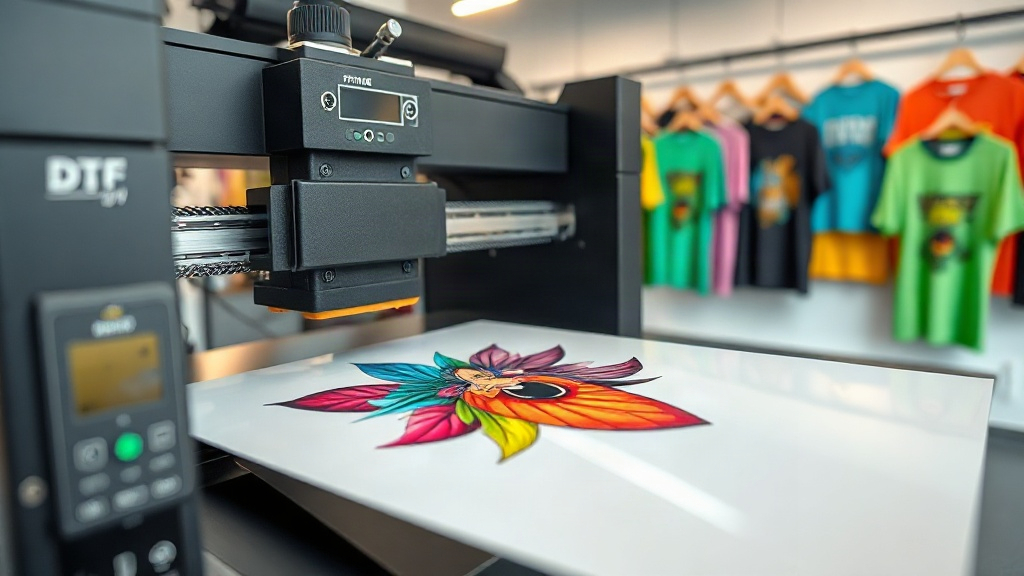
When I first heard about DTF printing, I was skeptical. As someone who's spent years working with heat transfer vinyl and screen printing, I thought I'd seen it all. But after testing DTF on a whim, I was blown away by the vivid colors and fine details it could achieve on dark fabrics. In this guide, I'll share everything I've learned about DTF printing, from how it works to how you can use it for your own projects.
What is DTF Printing?
DTF stands for Direct to Film. It's a printing method where your design is printed onto a special film, coated with adhesive powder, and then heat-pressed onto fabric. Unlike DTG (Direct to Garment) printing, which prints directly onto the shirt, DTF uses a transfer film as an intermediary. This allows for printing on a wider range of fabrics, including cotton, polyester, blends, and even nylon. The process involves a specialized printer, DTF film, and a heat press.
How Does DTF Printing Work?
The DTF printing process can be broken down into four main steps: designing, printing, powdering, and pressing. Let's walk through each.
Step 1: Design and Print
First, you create your design using graphic software like Photoshop or Illustrator. The design is then printed onto a sheet of DTF film using a DTF printer. These printers use special pigment inks (CMYK plus white) to create vibrant, opaque images. The white ink layer is crucial because it allows the design to show up on dark fabrics.
Step 2: Apply Adhesive Powder
After printing, the film is covered with a fine adhesive powder (often called hot melt powder). The excess powder is shaken off, and the film is heated to melt the powder, creating a sticky surface that will bond to the fabric.
Step 3: Heat Press
The prepared film is placed on the garment and heat-pressed at a specific temperature and pressure for a set time. The heat activates the adhesive, transferring the design from the film to the fabric. Once cooled, the film is peeled away, leaving a soft, durable print.
Why Choose DTF Printing?
There are several reasons why DTF printing has become a favorite among crafters and small businesses.
- Versatility: Works on almost any fabric, including cotton, polyester, blends, and even leather.
- Detail and Color: Produces high-resolution, full-color images with fine details and gradients.
- Durability: Prints are stretchable and withstand repeated washing without cracking or fading.
- No Weeding: Unlike vinyl, there's no tedious weeding process, saving time and effort.
- Cost-Effective for Small Runs: Ideal for one-off designs or small batches, as no screens or plates are needed.
DTF vs. Other Printing Methods
How does DTF stack up against other popular printing techniques? Here's a quick comparison.
DTF vs. DTG
DTG printing is great for 100% cotton shirts but struggles on synthetic fabrics. DTF excels on both, and often produces more vibrant colors on dark garments. However, DTG can be more cost-effective for large runs on cotton.
DTF vs. Vinyl
Heat transfer vinyl (HTV) is perfect for simple, single-color designs. But for complex, multi-color images, DTF is far superior because it doesn't require layering or weeding. DTF also feels softer on the fabric.
DTF vs. Screen Printing
Screen printing is the go-to for large orders of one design. It's cost-effective at scale but has high setup costs. DTF shines for small batches and detailed designs, with no setup fees.
Getting Started with DTF Printing
Ready to try DTF? Here's what you'll need and some tips to get started.
Equipment and Supplies
- DTF Printer: Options range from converted Epson printers to dedicated DTF machines.
- DTF Film: Available in sheets or rolls; choose the right thickness for your design.
- Adhesive Powder: Usually TPU-based; ensure it's compatible with your printer's inks.
- Heat Press: A reliable heat press with accurate temperature and pressure control.
- Inks: Pigment inks designed for DTF, including white ink.
Tips for Success
- Always do a test press on scrap fabric to dial in your settings.
- Store unused film and powder in a cool, dry place to prevent moisture damage.
- Use a lint roller on the garment before pressing to remove dust and fibers.
- Pre-press the garment to remove wrinkles and moisture.
- Follow the powder shaking and curing instructions carefully for proper adhesion.
Common Challenges and Solutions
Like any craft, DTF printing has its quirks. Here are some common issues and how to fix them.
Print Not Adhering
If the design peels off, it could be due to insufficient pressure, incorrect temperature, or not enough powder. Increase pressure, check temperature with an infrared gun, and ensure even powder coverage.
Colors Look Dull
Dull colors often result from using too little white ink or incorrect printer settings. Make sure your printer is set to the correct media type and that white ink channels are functioning.
Film Jamming
Film jams can occur if the film is not fed straight or if the printer's rollers are dirty. Clean the rollers and ensure the film is aligned properly.
Frequently Asked Questions
What fabrics can I use with DTF printing?
DTF printing works on a wide range of fabrics, including cotton, polyester, cotton-poly blends, nylon, and even leather. It's particularly good for dark colors because of the white ink layer.
How durable is a DTF print?
When applied correctly, DTF prints are very durable. They can stretch with the fabric and withstand multiple washes without cracking or fading. Following proper washing instructions (inside out, cold water, no bleach) will extend the life of the print.
Do I need a special printer for DTF?
Yes, you need a printer that uses DTF pigment inks and can handle DTF film. Many people convert Epson printers, but dedicated DTF printers are also available. These printers have white ink channels and are designed for the viscosity of DTF inks.
Can I use DTF on 100% polyester?
Absolutely. DTF printing adheres well to polyester and other synthetic fabrics. However, polyester requires lower pressing temperatures to avoid melting or dye migration, so adjust your heat press settings accordingly.
Is DTF printing cost-effective for small businesses?
Yes, DTF printing is very cost-effective for small runs because there are no setup fees or minimum order quantities. The main costs are the printer, film, powder, and ink, but once you have the equipment, the per-print cost is low.
With its versatility, vibrant results, and ease of use, DTF printing is a game-changer for anyone in the custom apparel world. Whether you're a hobbyist or a business owner, it's worth exploring. For more tips and inspiration, visit dtfmood.com.