
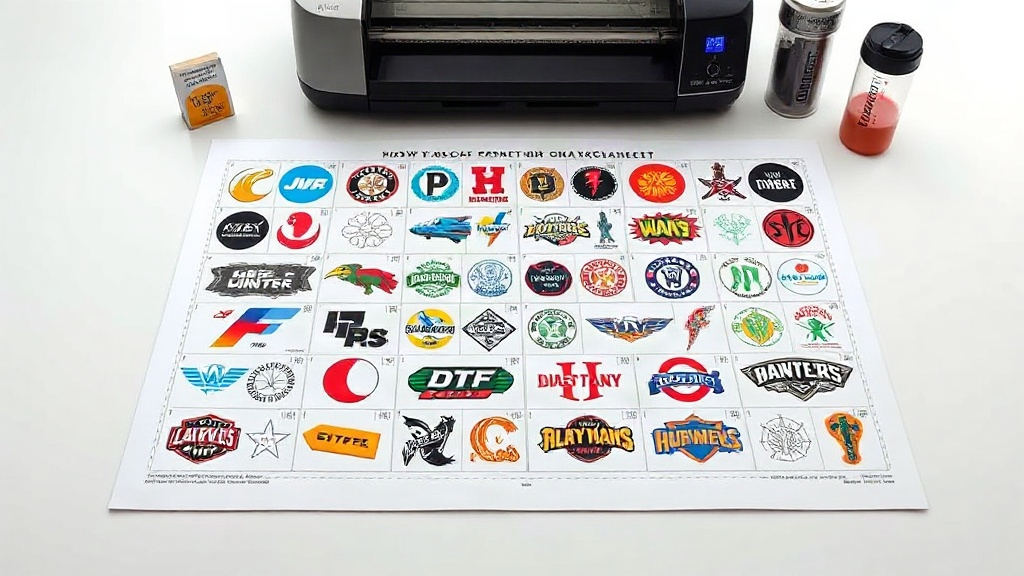
If you're in the custom apparel business, you've likely heard about DTF printing. It's a game-changer for producing vibrant, durable transfers on a wide range of fabrics. But as your orders grow, managing individual prints can become a bottleneck. That's where the DTF gangsheet comes in. This powerful technique lets you arrange multiple designs on a single sheet, maximizing efficiency and minimizing waste. In this guide, we'll dive deep into gangsheets: what they are, why they matter, and how you can use them to scale your business.
What Is a DTF Gangsheet?
A DTF gangsheet is a large sheet of transfer film that contains multiple designs printed together in a single pass. Think of it as a digital collage of your artwork, arranged to fit onto one sheet. Instead of printing each design separately, you gang them up, hence the name. This approach is particularly popular in the DTF printing community because it saves time, reduces material waste, and lowers production costs.
Gangsheets can be created for any size, from small sheets for sample orders to large rolls for mass production. The key is to optimize the layout so that you use as much of the sheet as possible, leaving minimal unused space.
Why Use a DTF Gangsheet?
If you're still printing one design at a time, you're missing out on significant benefits. Here's why gangsheets are a must-have for any serious DTF printer:
- Time Efficiency: Printing multiple designs at once drastically reduces the time spent loading and unloading the printer. You can produce more in less time.
- Cost Savings: By maximizing the use of each sheet, you cut down on wasted film and ink. This lowers your cost per print, improving your profit margins.
- Consistency: When you print multiple copies of the same design on one sheet, you ensure consistent color and quality across the batch.
- Scalability: Gangsheets make it easy to scale up production for large orders without increasing labor costs proportionally.
Moreover, gangsheets are ideal for handling complex orders with multiple designs, such as team jerseys or promotional merchandise.
How to Create a DTF Gangsheet
Creating a gangsheet might seem daunting, but with the right tools and approach, it's straightforward. Follow these steps to build an efficient gangsheet:
- Prepare Your Artwork: Ensure all designs are in a high-resolution format (300 DPI or higher) with transparent backgrounds. Color profiles should be set to CMYK for accurate printing.
- Choose the Right Software: Use graphic design software like Adobe Photoshop, Illustrator, or specialized RIP software that supports gangsheet creation. Some RIPs have automatic nesting features that optimize layout.
- Determine Sheet Size: Decide on the dimensions of your gangsheet based on your printer's capabilities and the size of your designs. Common widths are 13", 17", and 24".
- Arrange Designs: Place your designs on the canvas, leaving a small gap (about 0.1-0.2 inches) between them to avoid color bleeding. Rotate designs if needed to fit better.
- Add Registration Marks: These help align the film during transfer. Most RIP software can add them automatically.
- Print and Cure: Print the gangsheet using your DTF printer, apply hot melt powder, and cure it properly. Then, cut out individual designs as needed.
Remember, the goal is to minimize wasted space while keeping designs easily cuttable.
Tips for Optimizing Gangsheet Layout
To get the most out of your gangsheet, consider these expert tips:
- Group Similar Sizes: Place designs of similar dimensions together to create a more uniform layout.
- Use Nesting Techniques: If your software supports it, use automatic nesting to fill gaps with smaller designs.
- Leave Room for Cutting: Don't overcrowd; leave enough space for scissors or a cutter to navigate between designs.
- Consider Film Width: Align designs to the width of your film roll to avoid unnecessary trimming.
Common Mistakes to Avoid with DTF Gangsheets
Even experienced printers can slip up. Here are pitfalls to watch for:
- Overlapping Designs: This can cause color bleeding and ruin the entire sheet. Always maintain a safe gap.
- Inconsistent Pressure: When pressing multiple designs, ensure even pressure across the sheet to avoid uneven transfers.
- Ignoring Film Direction: DTF film has a printable side; placing designs on the wrong side will result in failure.
- Poor Powder Application: Excess powder can lead to a rough feel; too little causes poor adhesion. Use a powder shaker for even coating.
By avoiding these mistakes, you'll save time and materials.
Applications of DTF Gangsheets
Gangsheets are versatile and can be used for various applications:
- Custom T-Shirts: Print multiple sizes of the same design for a family reunion or team event.
- Small Business Orders: Efficiently produce mixed orders with different logos or slogans.
- Sample Packs: Create sample sheets with various designs to showcase to potential clients.
- Seasonal Promotions: Quickly produce limited-edition designs without committing to large runs.
Frequently Asked Questions
What is the maximum size for a DTF gangsheet?
The maximum size depends on your printer and film roll. Common widths are 13", 17", and 24", but you can print continuous rolls for larger gangsheets. Always check your printer's specifications.
Can I reuse a DTF gangsheet?
No, DTF gangsheets are single-use. Once the transfer is applied, the film cannot be reused. However, you can print multiple copies from the same digital file.
How do I prevent color bleeding between designs on a gangsheet?
Leave a gap of at least 0.1-0.2 inches between designs. Also, ensure your printer is calibrated correctly and use high-quality film.
Is special software required to create a DTF gangsheet?
While you can manually arrange designs in graphic software, using RIP software with nesting features is highly recommended for efficiency and precision.
What fabrics can I apply DTF gangsheet transfers to?
DTF transfers work on a wide range of fabrics, including cotton, polyester, blends, and even nylon. They are not recommended for treated waterproof fabrics.
Mastering the DTF gangsheet is a skill that pays off. It streamlines your production, cuts costs, and opens up new business opportunities. Start experimenting with gangsheets today and watch your efficiency soar.